










The Photon-Counting Revolution: How SinceVision's Solis B518 Is Replacing EMCCD Technology in Laboratories Worldwide
The Solis B518 back-illuminated sCMOS camera delivers 18 μm pixels, 0.5 e⁻ read noise, spatial photon-number resolution, and ultra-low dark current for quantum research, super-resolution microscopy, and global low-light imaging applications.
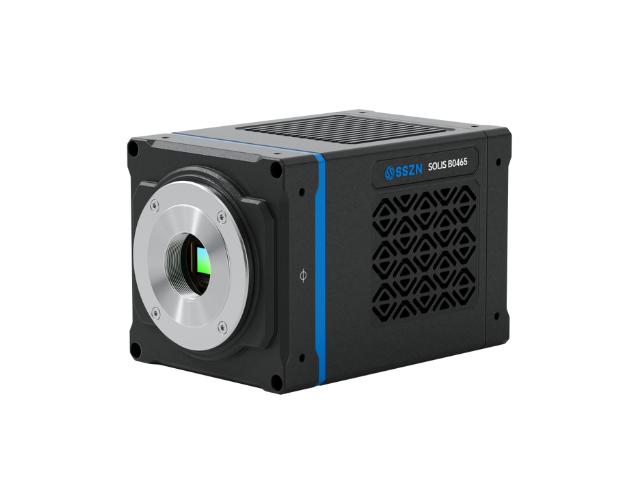


For decades, researchers have conducted the most daring work in quantum physics, single-molecule biophysics, and super-resolution microscopy on the edge of darkness. Researchers in Europe and North America have used detectors pushed to their limits. These devices have a hard time picking up signals. The signals are very faint and barely register. Single photon experiments, tiny structures, and delicate molecular interactions depend more on the imaging system. They rely on its ability to capture any detail, rather than just theory.
The arrival of SinceVision’s Solis B518 sCMOS camera alters that equation. It enters the field not as a small upgrade. It’s a unique technology that shifts the expectations of the whole discipline. In low-light imaging, EMCCD cameras used to lead the way. Now, the B518 marks a significant change. And for many researchers, it changes everything.
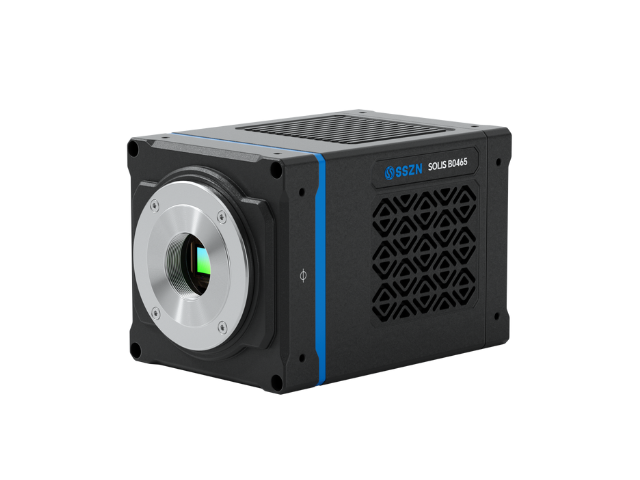
The EMCCD Dilemma: When Established Technology Reaches Its Limits
For years, EMCCD cameras formed the backbone of extreme low-light research. Their ability to amplify minuscule signals made them indispensable in photon-starved environments. Even the best tools have limits, and these limits have slowed scientific progress.
EMCCDs carry unavoidable issues: multiplication noise that blurs fine details, gain aging that erodes consistency over time, slow sampling rates that restrict dynamic experiments, and costs that strain research budgets across global research institutions.
Scientists often call these drawbacks “the tax you pay for seeing the invisible.” The Solis B518 operates with minimal noise to remove that tax.
Engineering Breakthrough: The Architecture of Sensitivity
Engineers designed the Solis B518 with careful attention to these bottlenecks. At its core is a custom scientific-grade back-illuminated (BSI) CMOS sensor. This technology changes what we expect from sCMOS.
BSI engineering puts circuitry behind the photodiode array. This design enhances the efficiency of photon capture. The B518 has a thicker charge-collection layer. This increases sensitivity in the visible range and also reaches into UV and near-infrared. This range is especially important for quantum researchers.
The 18 × 18μm oversized pixels exceed industry standards. They also offer great sensitivity. SinceVision boosts the photosensitive area. This improvement raises signal-to-noise ratios to levels only found in EMCCD systems.
The visual evidence is striking. In an 890-nm flame test, a standard 6.5μm back-illuminated sCMOS sensor needed ten times more exposure than the B518 to reach similar brightness. For researchers who fight for every photon, this difference feels like finding a hidden world.
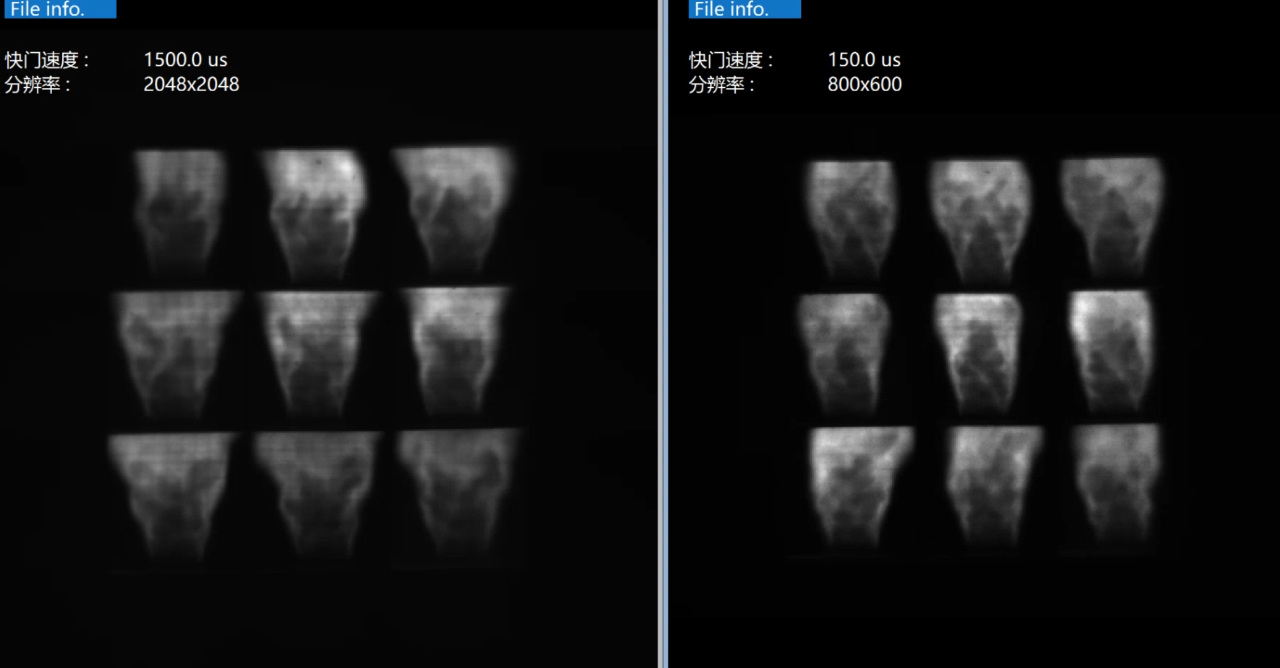
Image: Left: 6.5μm pixel, 1500μs exposure; Right: 18μm pixel, 150μs exposure
The Silence of Perfection: Achieving Sub-electron Noise
In scientific imaging, one number has become legendary: 1 electron. Cameras that meet or exceed this threshold belong to a rare group. These sensors can detect tiny changes in light.
Under the strict EMVA 1288 standard, the Solis B518 shows about 0.5 e⁻ readout noise. This level was once thought possible only with EMCCD systems.
Researchers describe this as “breaking the sound barrier of imaging.” Below this threshold, many experiments can happen. These methods include faint fluorescence tracking, single-photon state identification, long-exposure spectroscopy, and subtle intensity mapping in biological samples. To cross that line with a CMOS-based system signals a turning point for the field.
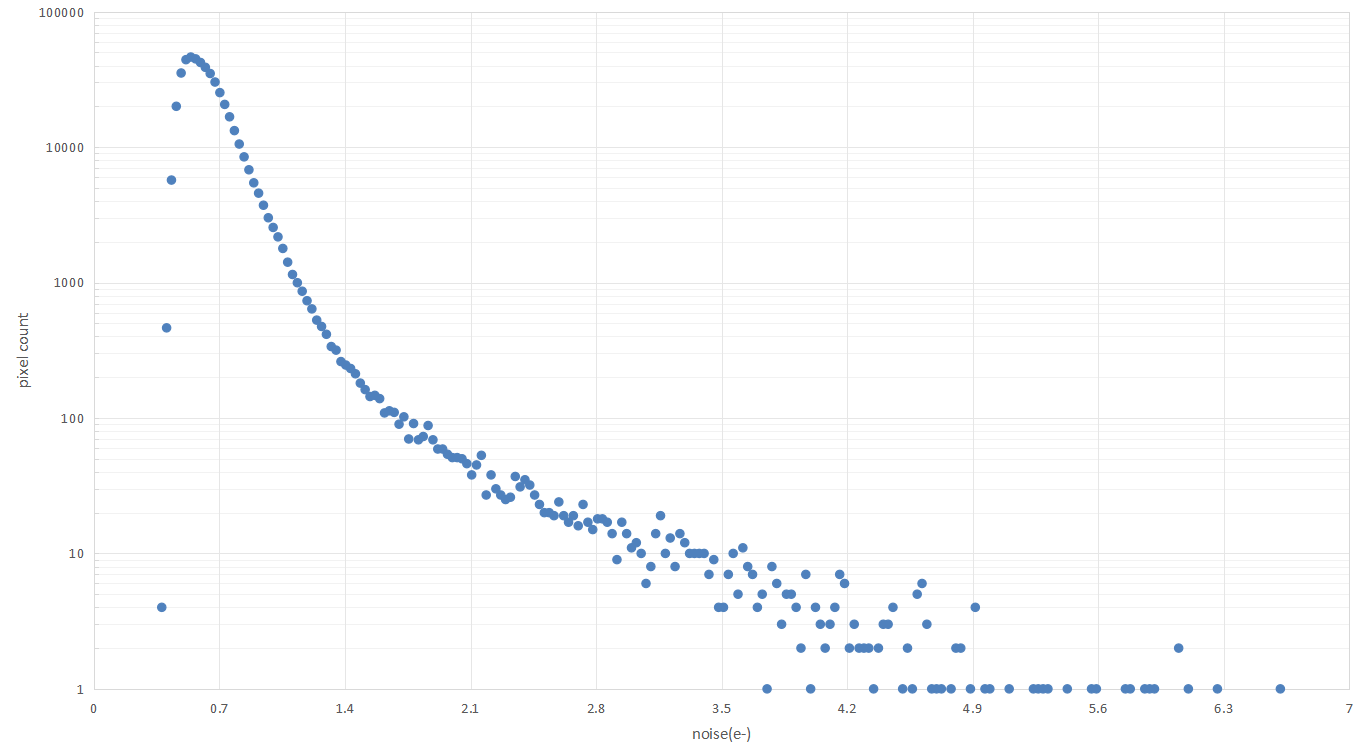
Image: Readout noise statistics
Counting Photons: When Digital Imaging Becomes Quantum Measurement
Low noise enables a more profound capability: spatial photon-number resolution. The B518 has a very clean signal. This allows us to measure each photon arrival in a direct manner, rather than relying on statistical estimates.
In controlled tests, the camera recorded about 3 electrons per pixel on average. This imaging behavior followed a Poisson distribution. This shows that light behaves like discrete particles.
This is more than a performance metric; it is a scientific threshold. Quantum optics groups now view the B518 as a tool for mapping photon modes. Biophysicists see a pathway to tracking interactions at the single-molecule level. For many researchers, this is the first time a CMOS camera has functioned not simply as an imager, but as a quantum measurement device.
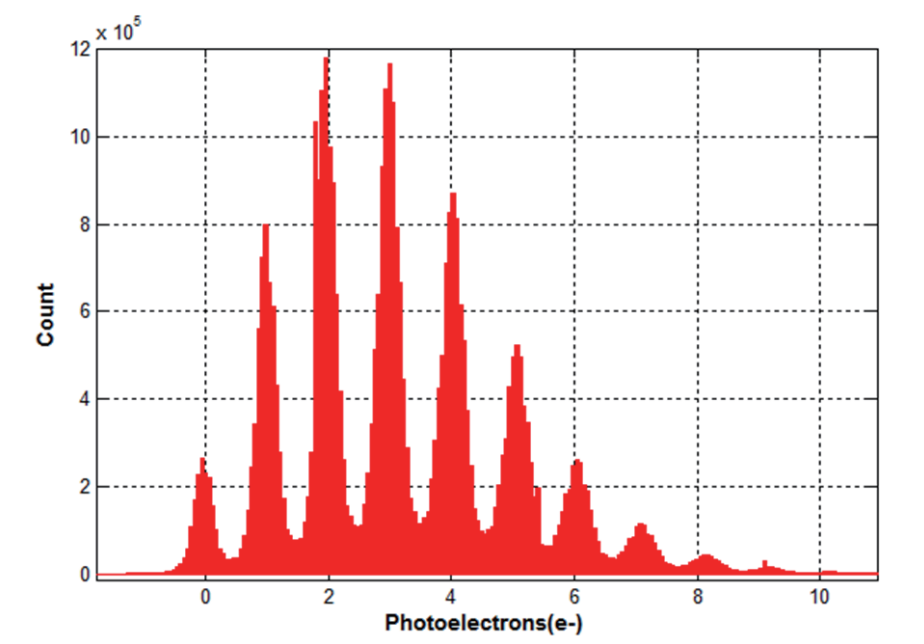
Image: Photo-electron probability distribution
The Cold Truth: Vacuum Sealing and the Pursuit of Perfect Darkness
Long-exposure imaging brings a new challenge: dark current. This is caused by thermally generated electrons that slowly affect low-light experiments. For decades, the solution has been deeper cooling—but cooling alone is not enough.
The Solis B518 combines multi-stage TEC cooling with at least a 60°C temperature differential and SinceVision’s full vacuum-sealed chamber with a leakage rate of ≤10⁻⁹ Pa·m³/s. The result is an imaging space that looks more like deep space than a lab bench.
At –30°C, the B518 has a dark current of 0.007 e⁻/pixel/s. This is one of the lowest levels for a commercial scientific camera. This lets European labs track quantum states overnight. It helps North American research centers conduct long biological studies without baseline drift.
To stabilize data, SinceVision uses a special correction algorithm. This algorithm normalizes gray-value shifts from different exposures. It helps keep long-term monitoring accurate.
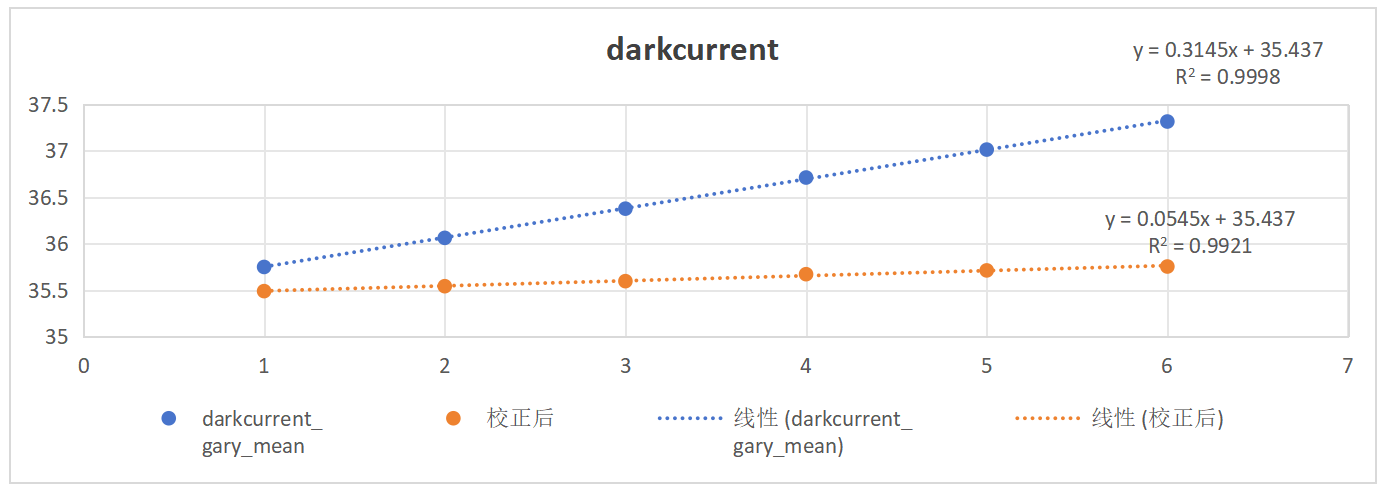
Image: Dark current and correction effect at -10°C
Uniformity and Linearity: The Unsung Heroes of Scientific Imaging
In the world of precision measurement, uniformity can matter as much as sensitivity. Millions of pixels need to work well and consistently. This is often ignored until it affects the accuracy of a study.

Image: Left: Before correction (1.6 e-); Right: After correction (0.2 e-)
The Solis B518 has a DSNU of 0.3 e⁻. It uses onboard correction algorithms to balance pixel behavior across the sensor. This level of uniformity is vital for fluorescence quantification, high-precision spectroscopy, and any experiment demanding absolute reproducibility across frames.
Researchers call it “achieving harmony across millions of pixels.” This is a quiet but key win for quantitative imaging.
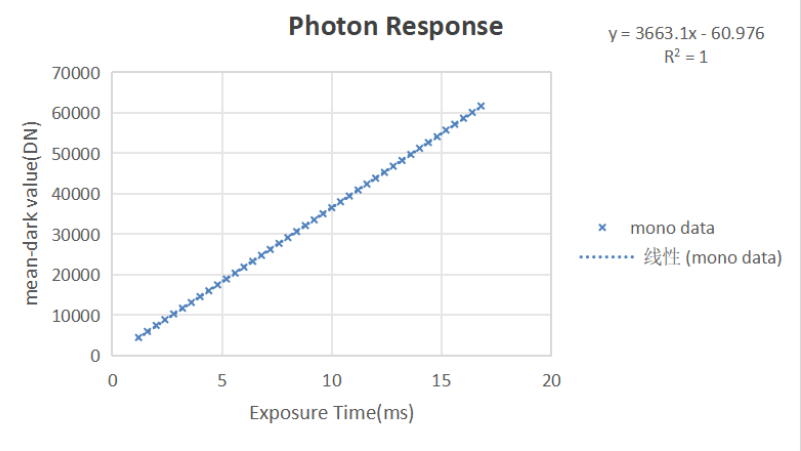
Image: Linearity curve under CMS 16-bit mode
A New Foundation for Discovery
With the Solis B518, SinceVision stands out as one of the few companies advancing scientific imaging in both physics and engineering. The camera has real features: photon counting, sub-electron noise, deep cooling, and high sensitivity. Here are the key steps for the next ten years in quantum science, life sciences, and advanced materials research.
For laboratories striving to see deeper into the invisible, the B518 doesn’t represent new technology. It represents a new possibility. The Solis B518 is available for researchers who want to push measurement limits. You can test it and get technical advice. Contact us here!
Frequently Asked Questions (FAQ)
What is the Solis B518?
A scientifically oriented sCMOS camera built for ultra-low-light detection and single-photon imaging, featuring a back-illuminated sensor, very low readout noise, vacuum sealing, and advanced cooling for reliable, stable results.
How does it compare to EMCCD cameras?
EMCCD cameras are a long-standing standard but suffer from aging gains, multiplication noise, slower frame rates, and higher costs. The B518 offers sub-electron readout noise, high QE, faster readout, lower overall cost, and less aging-related issues.
What makes the sensor special?
A custom 18×18 μm back-illuminated CMOS sensor with high QE across a wide spectral range thanks to a thicker charge-collection layer.
Key performance highlights?
0.5 e− readout noise (model-dependent); 18 μm pixels; up to the configured frame rate; cooling up to 60°C differential; vacuum leakage ≤ 10⁻⁹ Pa·m³/s; photon-number resolution capabilities.
What imaging capabilities does it offer?
Temporal photon counting and spatial photon-number resolution with Poisson noise characteristics, suitable for ultra-low-light work like single-photon measurements and fluorescence.
How does the cooling system work?
Multi-stage TEC cooling with a large temperature differential and a full vacuum-sealed housing to minimize dark current, enabling long exposures with low noise.
What is DSNU and how is it controlled?
DSNU measures pixel-to-pixel dark current variation. The B518 brings DSNU down to about 0.3 e− with onboard correction for better image uniformity.
Are there built-in image corrections?
Yes, patented/advanced correction algorithms improve gray-value stability and overall image quality.
Who should consider this camera?
Researchers in quantum physics, life sciences, and materials science needing ultra-low-light sensitivity and high stability.
How to evaluate or buy?
EMVA 1288-tested parameters; contact the official site or sales team for details or trial units. Custom CMOS imaging solutions are available for collaborations.
About other Solis models?
We have another model - B0465 which serves different low-light microscopy needs.
Maintenance and lifecycle?
Engineered to minimize aging effects, with robust vacuum sealing and cooling to maintain low dark current over time.
Where to get more information?
Visit the official website for specs, notes, and contact options. Our team will provide demos and technical datasheets.






 Compare
 Clear the comparison bar
