










Inspection of Complex Curved Surface Contours for Automotive Seat Manufacturing
Inspect automotive seat backrest with the SinceVision SD22-100. High precision laser displacement sensors for complex curved surfaces and 100% quality control.
 Product Inquiry
Related tags
I. Customer Pain Points
In automotive seat manufacturing, the curvature of the backrest contour directly impacts seating comfort and brand quality. Manufacturers face three primary challenges:
Material Damage: Traditional contact measurement methods often scratch or deform leather, fabric, and soft engineering plastics.
Efficiency Gaps: Manual visual inspection is too slow for modern high volume production lines and is prone to human error.
Complex Geometry: Conventional optical sensors frequently struggle to capture data from complex 3D contours or dark, reflective surfaces.
SinceVision SD22-100 laser displacement sensor addresses these issues using 20 μm repeatability and specialized rectangular spot technology. This allows for real-time, 100% inspection-level contour control without risking material integrity.
II. Solution
SinceVision SD22-100 provides a non-contact solution for high speed precision sensing:
1. Material Compatibility and Protection
The non-contact laser measurement system is compatible with various materials including leather and fabric. Because the sensor never touches the workpiece, it eliminates the risk of surface damage while maintaining high inspection throughput.
2. Robotic Integration and Synchronous Acquisition
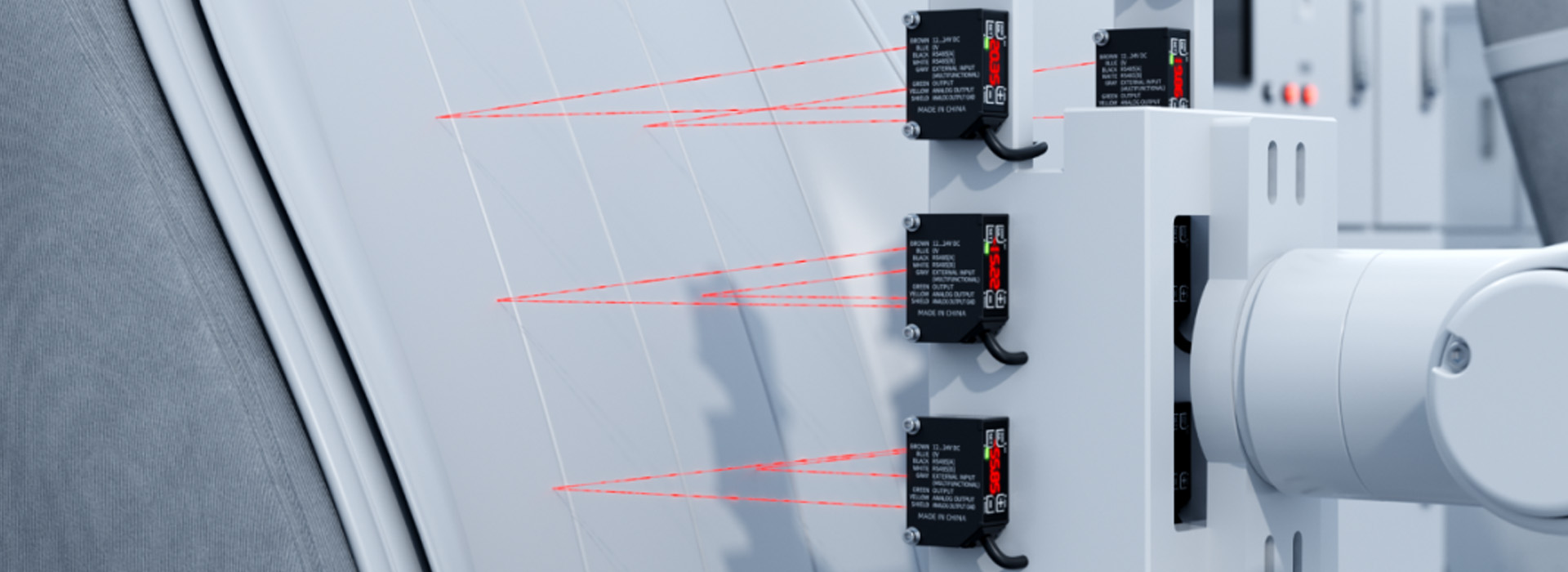
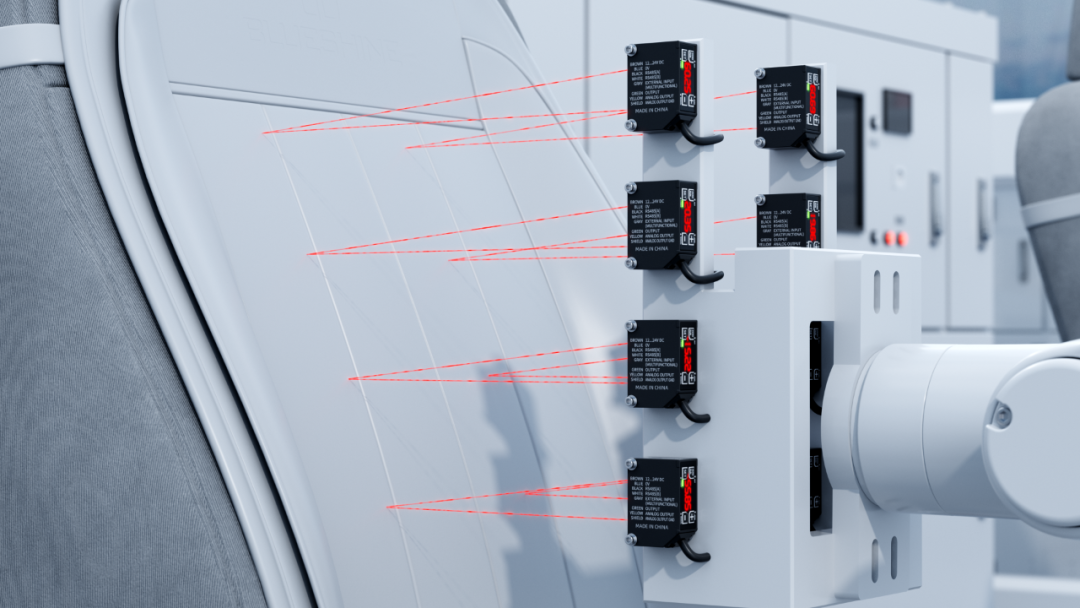
When combined with a robotic arm, multiple SD22-100 sensors can perform real-time measurement and data recording of the backrest surface. This setup ensures consistent results across every unit produced.
3. Real-Time Data and Connectivity
The sensor supports EtherCAT, RS485, and analog outputs. This connectivity allows contour data to be transmitted instantly to the production system, supporting process optimization and full traceability for quality management.
4. Technical Specifications for Curved Surfaces
The SD22-100 features a 100 mm reference distance and a ±50 mm measurement range. This large range allows the sensor to handle deep curvatures without losing signal. The rectangular light spot is specifically designed to handle stitching areas and holes, avoiding the missed detections common with standard point lasers.
5. Deployment and Debugging
The system is designed for fast integration with an intuitive digital display and button-based adjustments for on-site parameter optimization. It enables manufacturers to move from periodic sampling to a total 100% inspection workflow, ensuring every automotive seat meets design specifications.








 Compare
 Clear the comparison bar
