










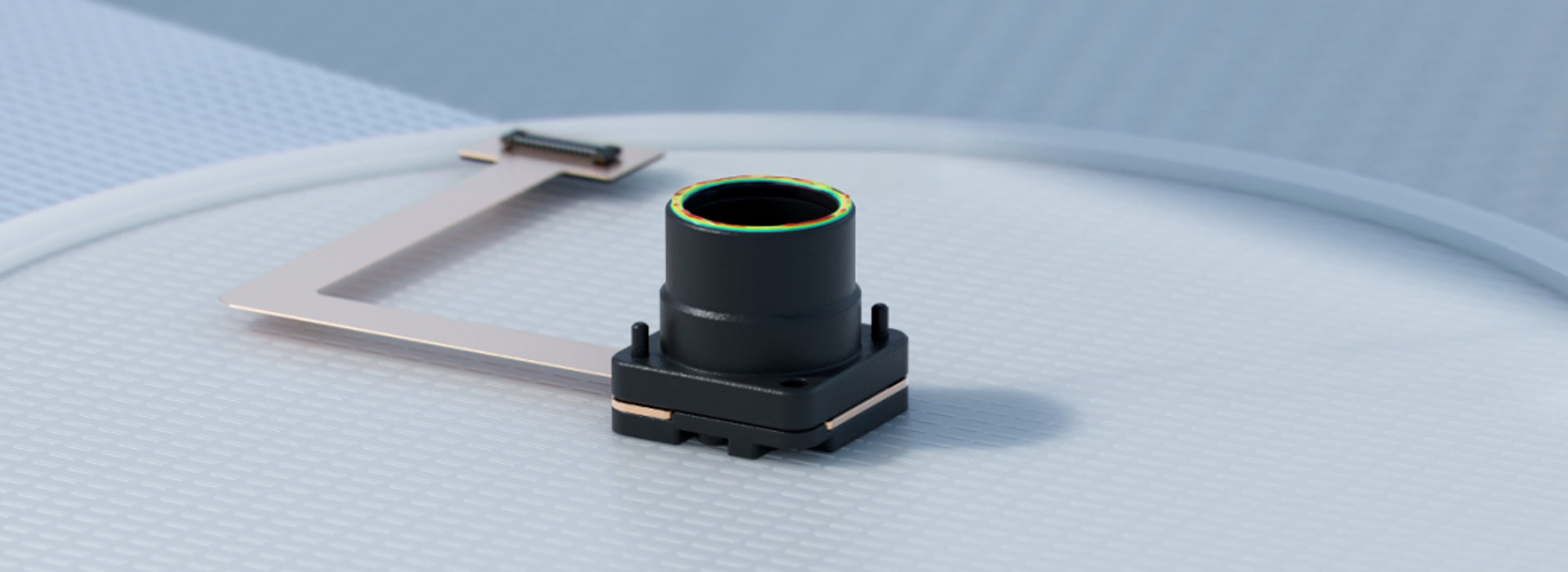
Precision Control for Automotive Camera Manufacturing
Automate automotive camera yields with the SinceVision SD33 laser displacement sensor. This ensures stable glue volume and prevents needle collisions.
 Product Inquiry
Related tags
I. Industry Pain Points
In the production of automotive camera modules, the dispensing process for hold brackets determines both structural integrity and optical alignment. Traditional methods often lack the real-time feedback required for high-speed lines, leading to three primary issues:
Inconsistent Glue Volume: Changes in the distance between the dispensing valve and the workpiece cause fluctuations in glue spot diameter. This leads to overflow or insufficient bonding.
Risk of Needle Collision: Workpiece flatness errors or positioning tolerances can cause the dispensing needle to strike the surface during high-speed movement, damaging equipment.
Speed and Precision Trade-offs: Standard sensors often struggle to maintain ±0.01 mm accuracy while operating at the millisecond-level response times required for complex dispensing paths.
II. Measurement Requirements
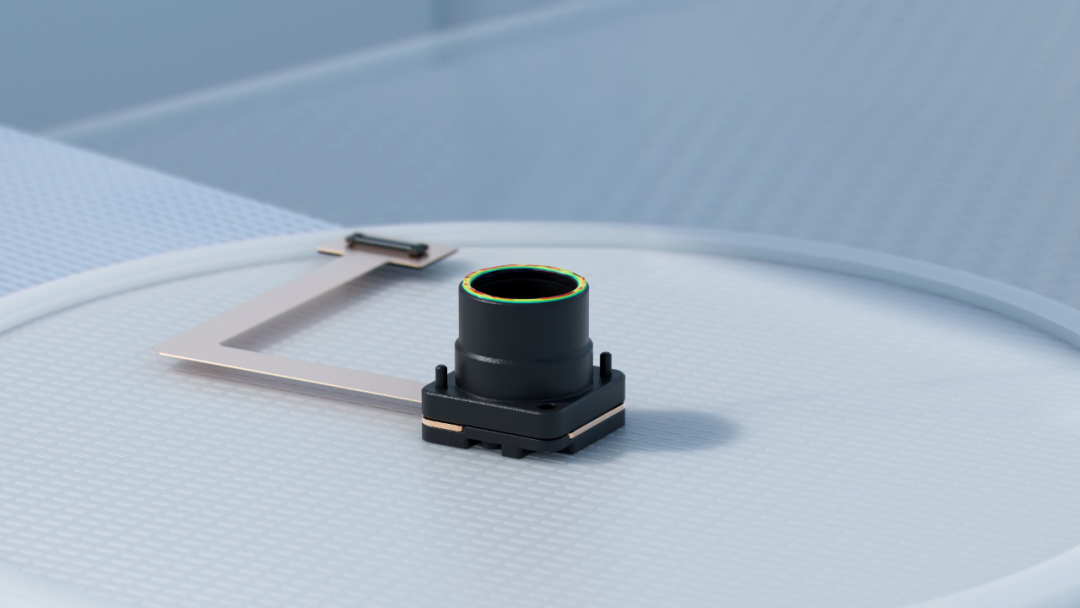
Application: Dispensing positioning for automotive camera hold brackets.
Workpiece Dimensions: 20 mm x 20 mm x 20 mm.
Accuracy: Repeatability of 0.01 mm or better.
Response Speed: Sampling frequency of 2 kHz or higher.
III. High-Precision Dispensing Guidance System
To resolve these manufacturing challenges, the SinceVision SD33-30 point laser displacement sensor is integrated into a real-time height guidance system.
1. Core System Parameters
The SD33-30 is a compact, high-performance Laser Displacement Sensor for Dispensing Guidance with the following specifications:
Reference Distance: 30 mm.
Measurement Range: ±4 mm.
Linearity: ±0.1% F.S.
Spot Size: 70 x 260 μm.
Sampling Frequency: Adjustable from 300 Hz to 3 kHz.
2. System Architecture and Principle
The guidance system integrates the SD33-30 sensor with the dispensing machine motion module and the host controller. The sensor is mounted adjacent to the dispensing valve to monitor the bracket surface height in real time at a 3 kHz rate.
Data is transmitted via an RS485 interface to the control system. The system compares the live height data against the preset focal distance and issues compensation commands to the Z-axis. This maintains a constant gap between the valve and the workpiece, providing reliable Dispensing Guidance for manufacturing environments.
3. Application Advantages
Stable Glue Consistency: Linear accuracy of 8 μm keeps height errors within ±0.01 mm, ensuring uniform glue spots.
Collision Avoidance: Millisecond-level detection of height anomalies allows the system to react before a needle collision occurs.
High-Speed Execution: The 3 kHz sampling frequency enables a "measure-decide-execute" loop that keeps pace with rapid production cycles.
Increased Yield: Reliable trajectory accuracy reduces rework and scrap rates in camera assembly.
IV. SinceVision Sensor Recommendation
SinceVision SD33-30 serves as a technical benchmark for high-precision dispensing in the automotive electronics sector. Its combination of micron-level accuracy and industrial-grade robustness makes it an ideal solution for achieving zero-defect production targets.
Beyond automotive cameras, this sensor is highly effective for dispensing and positioning tasks involving radar brackets, sensor bases, and other precision components. SinceVision provides professional sensing solutions designed to overcome complex measurement challenges and improve manufacturing competitiveness. Contact our technical team for customized integration support.







 Compare
 Clear the comparison bar
